So, you’ve just gotten a piercing. Now what? Well, after weeks or months of cleaning and keeping the area clean, and avoiding tugging, yanking, or removing your jewelry, you should be ready for a downsize!
Downsizing is the practice of switching the longer jewelry you were pierced with to a shorter post or bar, once all swelling has gone down and there is no sign of infection. Downsizing is crucial to ensure a smoother healing process and prevent migration, as the shorter jewelry reduces irritation and prevents the likelihood of snags or bumps. This should always be done by a professional in a sterile environment.
If your piercer uses BooksOpen, scheduling a complimentary downsize will be as quick and easy as the procedure itself. The problem, though, can be knowing when it’s time to book that appointment. That’s why we’ve made this handy guide: to walk you through the downsizing process and give you the confidence to take control of your healing and aftercare.
💡What is Downsizing?
As you may already know, downsizing is a change of jewelry, typically to a smaller, more snug-fitting post. This procedure is an important step in the healing process and prevention of trauma to the piercing.
Your downsize is determined by the gauge, or thickness, of your initial jewelry and the piercing size. Jewelry of the right length and sickness will make your piercing more comfortable and less susceptible to irritation.
🕒When Should I Downsize My Piercing?
Here are five topics to consider when you’re thinking of downsizing:
- Time - How long has it been since you got your piercing? What is the timeframe your piercer recommended to come in for a downsize?
- Swelling - Are you still seeing swelling in your piercing? Are you feeling any pain?
- Discharge - Are you seeing any discharge around your piercing site? What does it look and/or feel like?
- Snagging - Is your piercing getting caught on clothes or hair? Is this causing any trauma to the piercing site?
- Room - Is the bar of your jewelry visible? How much can you see? Could your piercing be migrating?
When you should downsize depends greatly on the type of piercing you have and how your body reacts to it, including factors like health, lifestyle, stress, and nutrition.
Depending on your piercing, you may need to wait anywhere from 3-16 weeks to downsize, and possibly more than once. Some piercings may not even need downsizing at all: a rook, daith, septum, eyebrow, navel, nipple, genital, or surface piercing may heal correctly without revision. Below are some recommended timelines for piercing downsizing.
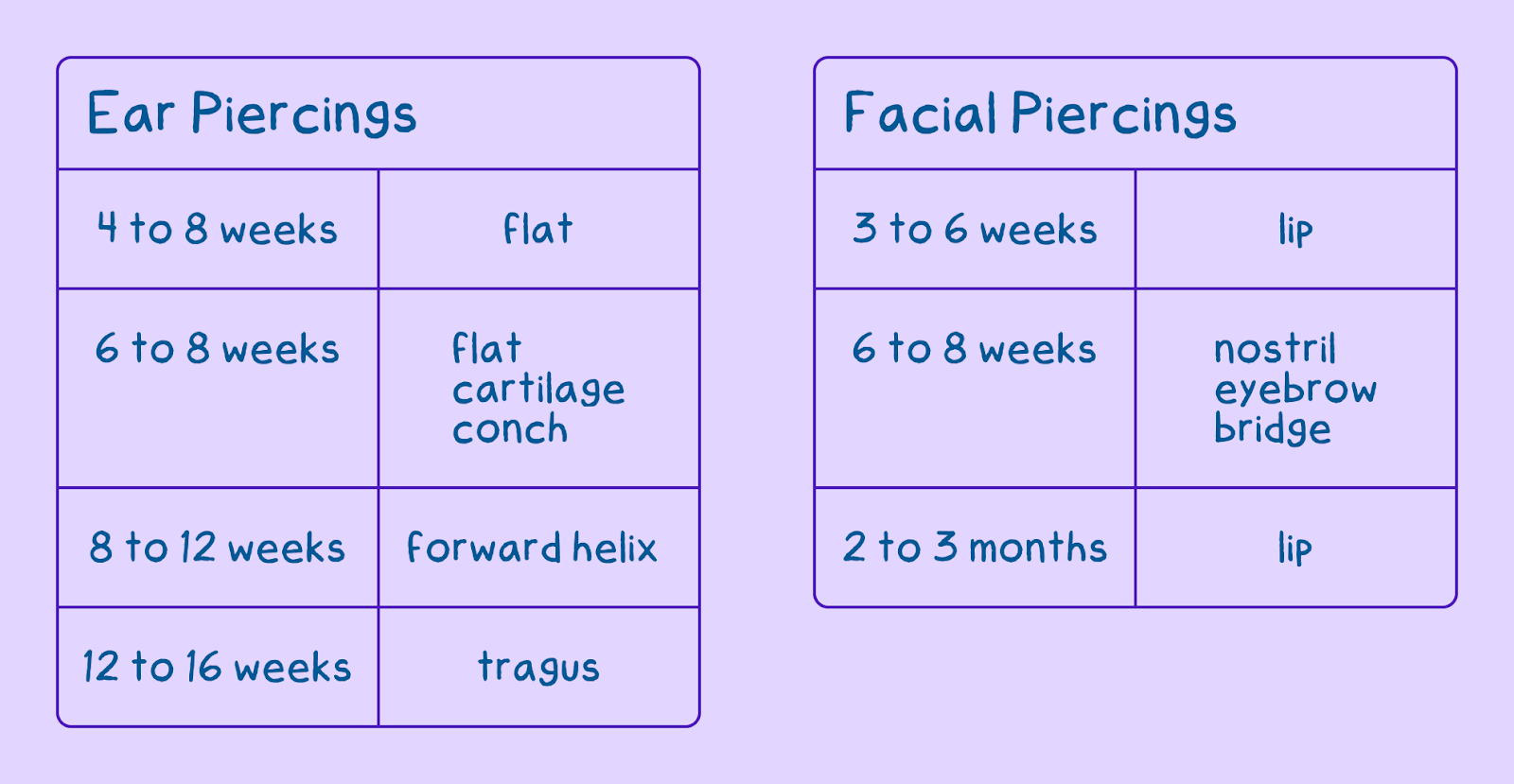
You may need to downsize before or after the established window for your particular piercing, as well. Signs your piercing is healing well and ready to downsize include the absence of swelling, fluid, and crust, or the appearance of excess room, movement, or a loose feeling to your jewelry. Always check with your piercer if you think you’re ready for the swap; they can best determine if the site is adequately healed and ready for the change!
✅Why is Downsizing Important?
Downsizing is an important part of the healing process as it greatly reduces the risk of damage. Piercings are typically done with a thicker, longer post at first, which allows for swelling and prevents your jewelry from embedding itself into the skin. However, leaving your initial jewelry in can be detrimental to your piercing, threatening the possibility of irritation, scarring, or even rejection.
Consider the following reasons you should downsize your piercing when it’s ready:
- Look - Piercings typically look better once downsized, as the new jewelry in place is chosen by your piercer to suit you the best
- Feel - Your piercing will also feel better upon downsizing, as the shorter post prevents movement and pulling
- Health - Downsizing is crucial to the health of your piercing by preventing trauma and infection
- Comfort - Wearing a post at the ideal length ensures maximum comfort because it ensures your piercing will heal properly as well as avoiding risks of migration
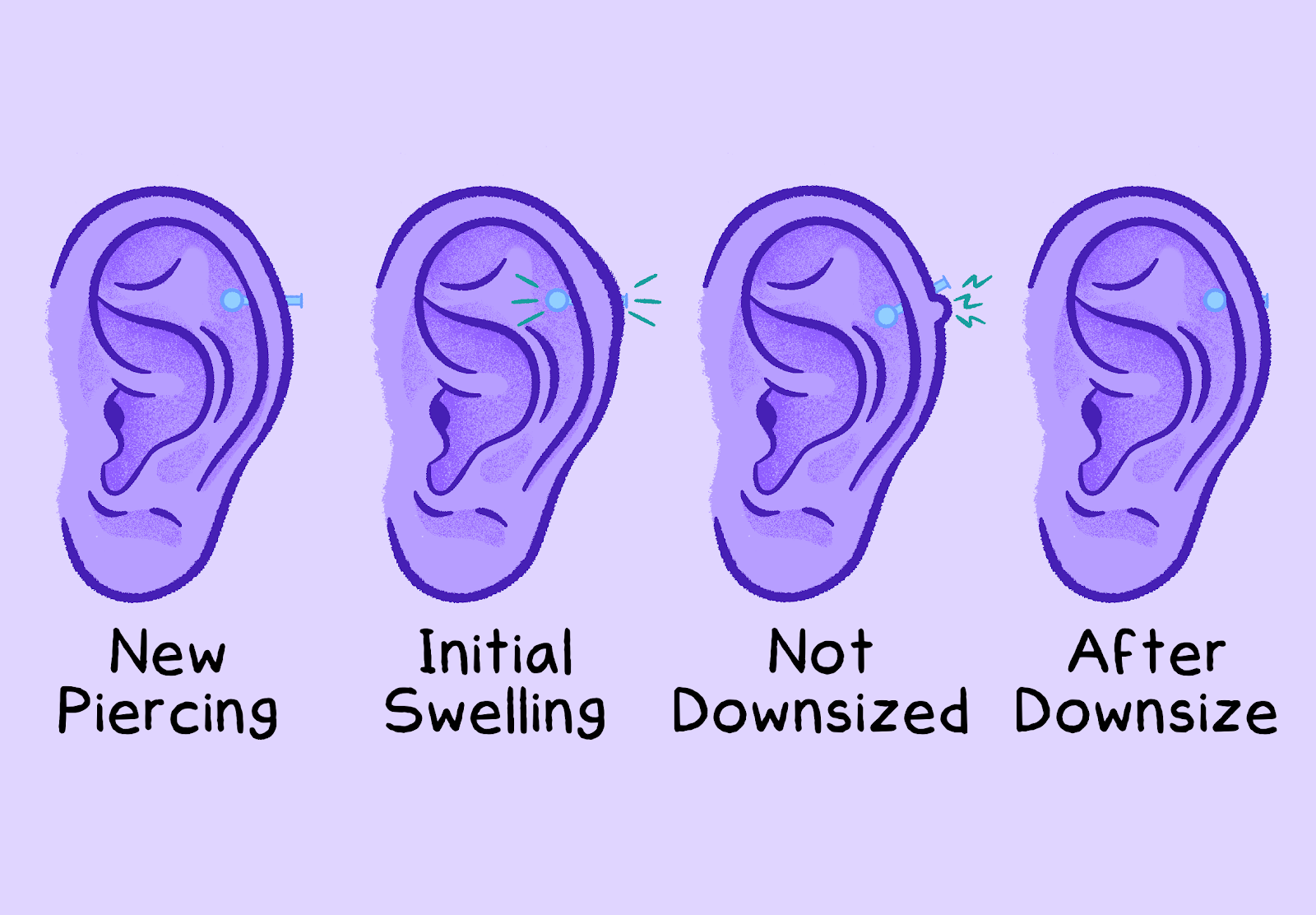
With a longer, looser post left in place, you increase the likelihood of snagging your piercing on hair and clothes, which can lead to bumps and infection. A long post left in can also cause the piercing to migrate and shift, which can only be remedied by removing, re-piercing, and healing it all over again.
It’s also important that downsizing is done by a piercer in a professional setting. Although switching jewelry out yourself may seem easy, at the downsize stage, your piercing isn’t fully healed, and a clean, sterile environment and equipment are a must. Piercers can properly assess the state of your piercing and, if you’re ready, ensure a comprehensive, sanitized process from start to finish. Further, having a professional change your piercing minimizes the likelihood of causing trauma in the process.
Downsizing is a key factor in a piercing that both looks and feels good. By switching your initial jewelry to a shorter post, you can pursue a smooth path to healing your piercing that looks and fits securely.
⚙️How Do I Get my Jewelry Downsized?
The best way to go about downsizing your piercing is to consult with your piercer after the recommended time, or earlier if you notice signs of improvement. Most piercers will recommend scheduling a follow-up appointment after your piercing to see how it’s healing and assess any issues. At this appointment, you can inform your piercer of any discomfort you’re experiencing and discuss the optimal materials and appearance that work for you.
Not to sound like a broken record, but this procedure should be done by a professional who can handle your piercing safely. Without assurance that your piercing is healing well and ready for a change, you jeopardize reopening the wound or even closing it.
Depending on your body and piercing, you may need an upsize or multiple downsizing sessions based on the amount of swelling. This process can be extra tricky with stretched piercings, which require gradual reductions in size to avoid pain or tearing.
Once your piercer determines you’re ready for downsizing, the process itself is simple and quick. Your piercing may be slightly sensitive, but the jewelry change shouldn’t cause you any pain. Downsize appointments are typically complimentary as well, or cost a small fee in addition to your new jewelry purchase.
⚙️For Piercers: How to Set Automatic Downsize Appointments with BooksOpen
With BooksOpen, you don’t need to keep track of your clients’ piercings and their healing timelines; you can set and forget a follow-up reminder when they schedule their initial appointment!
- Navigate to your services in the settings window
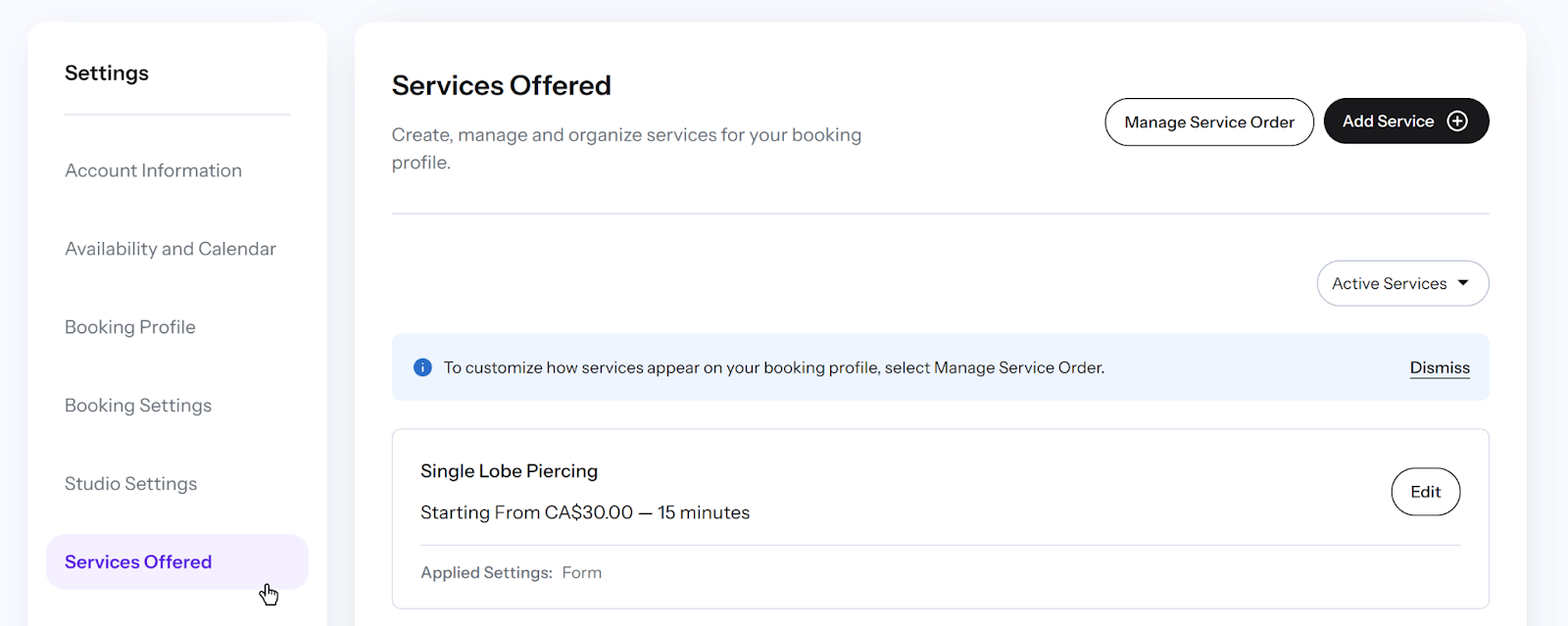
- If you haven’t already, create a Downsize Appointment service to your liking
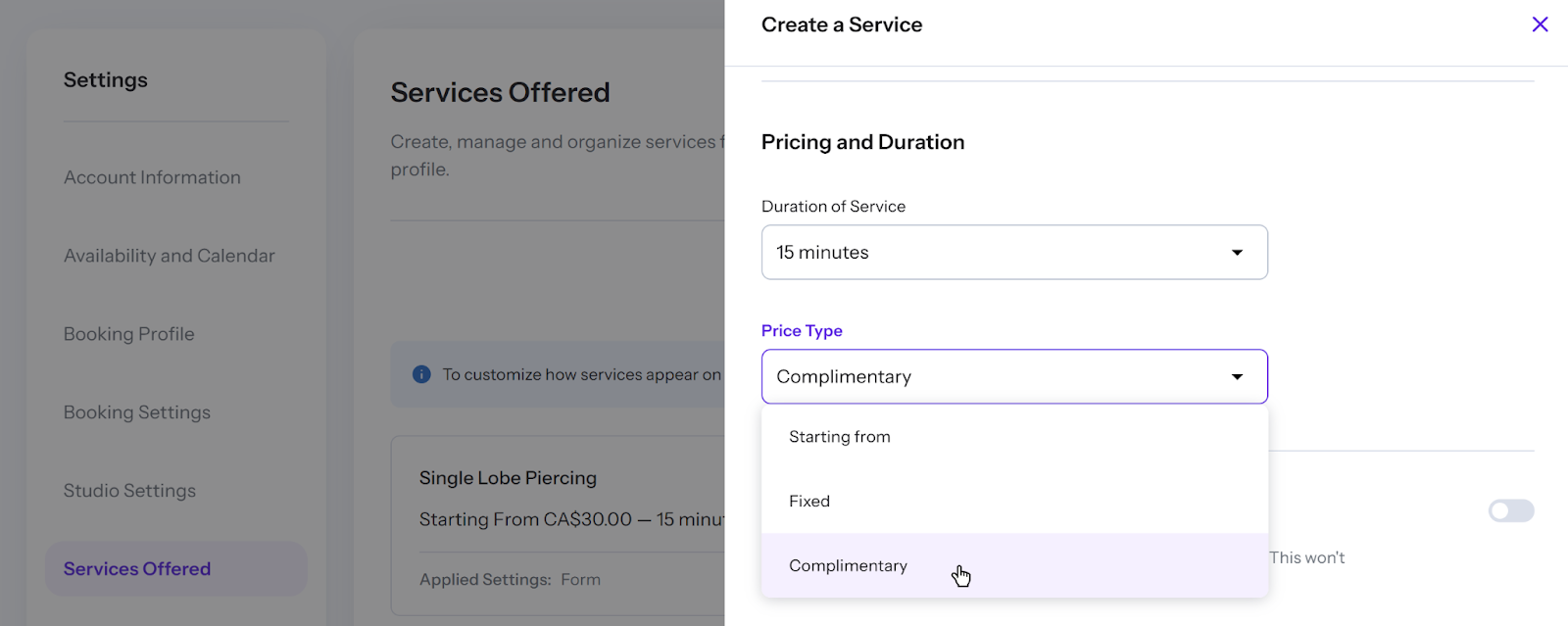
- Create or select the service you’d like to add a downsize reminder to
- Toggle on Automatic Service Reminders
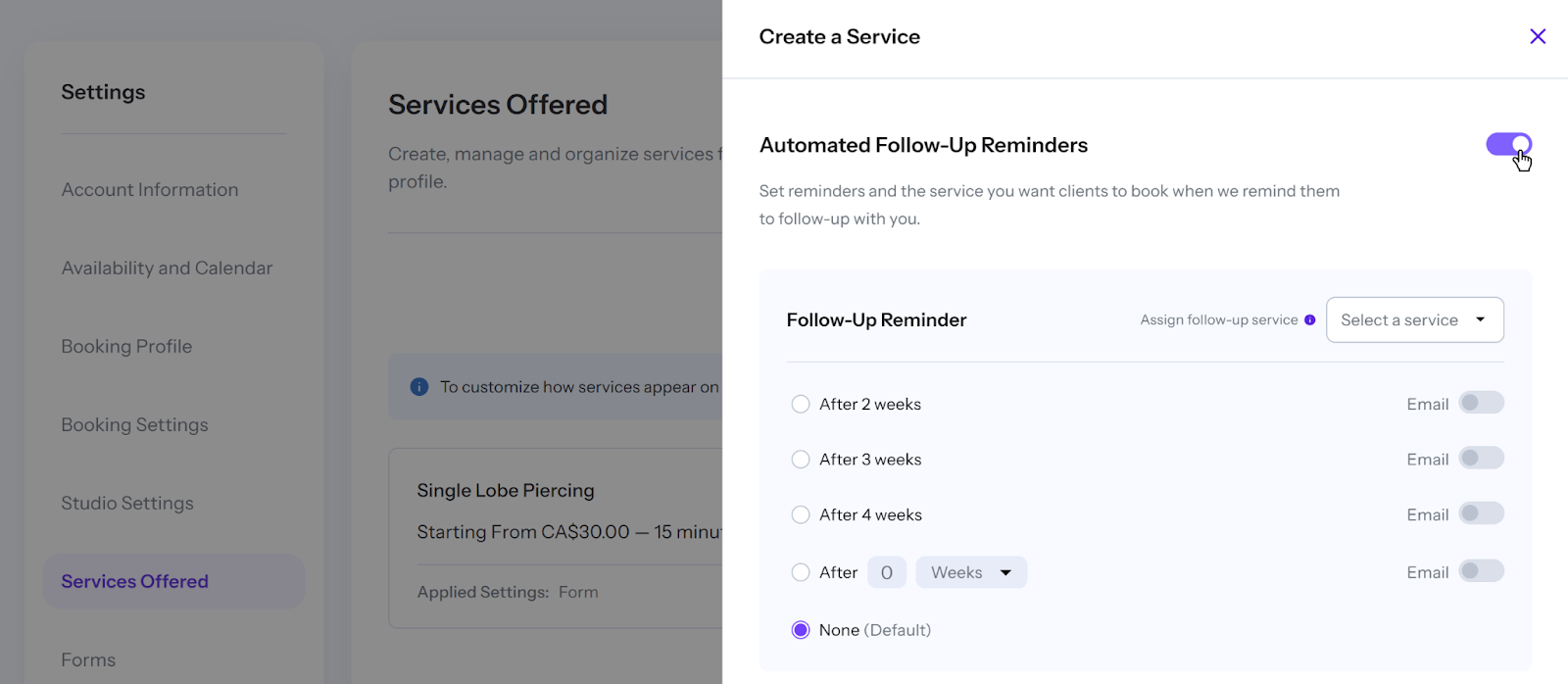
- Assign Downsize Appointment to your follow-up reminder
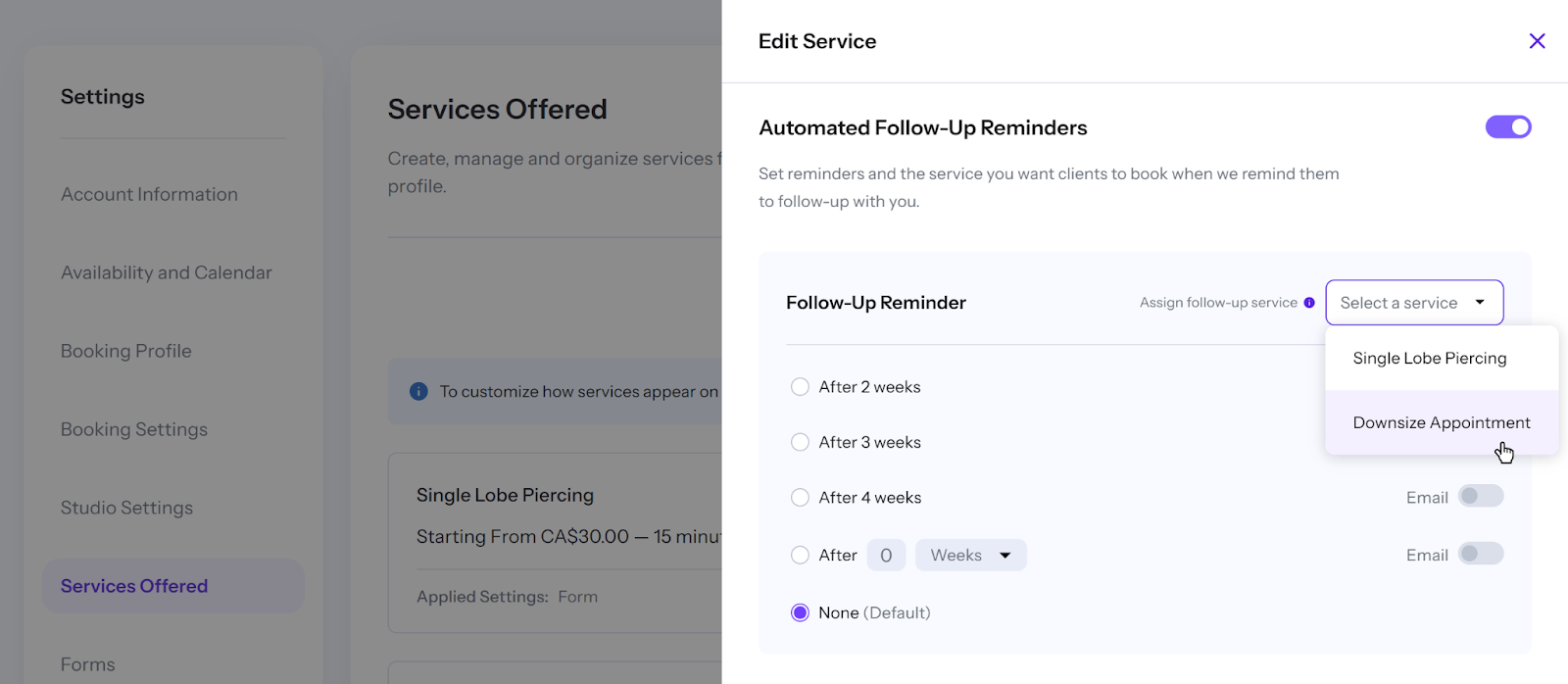
- Select the time after the appointment you want your client to be notified. Email notification will be toggled automatically. You can choose to turn this off.
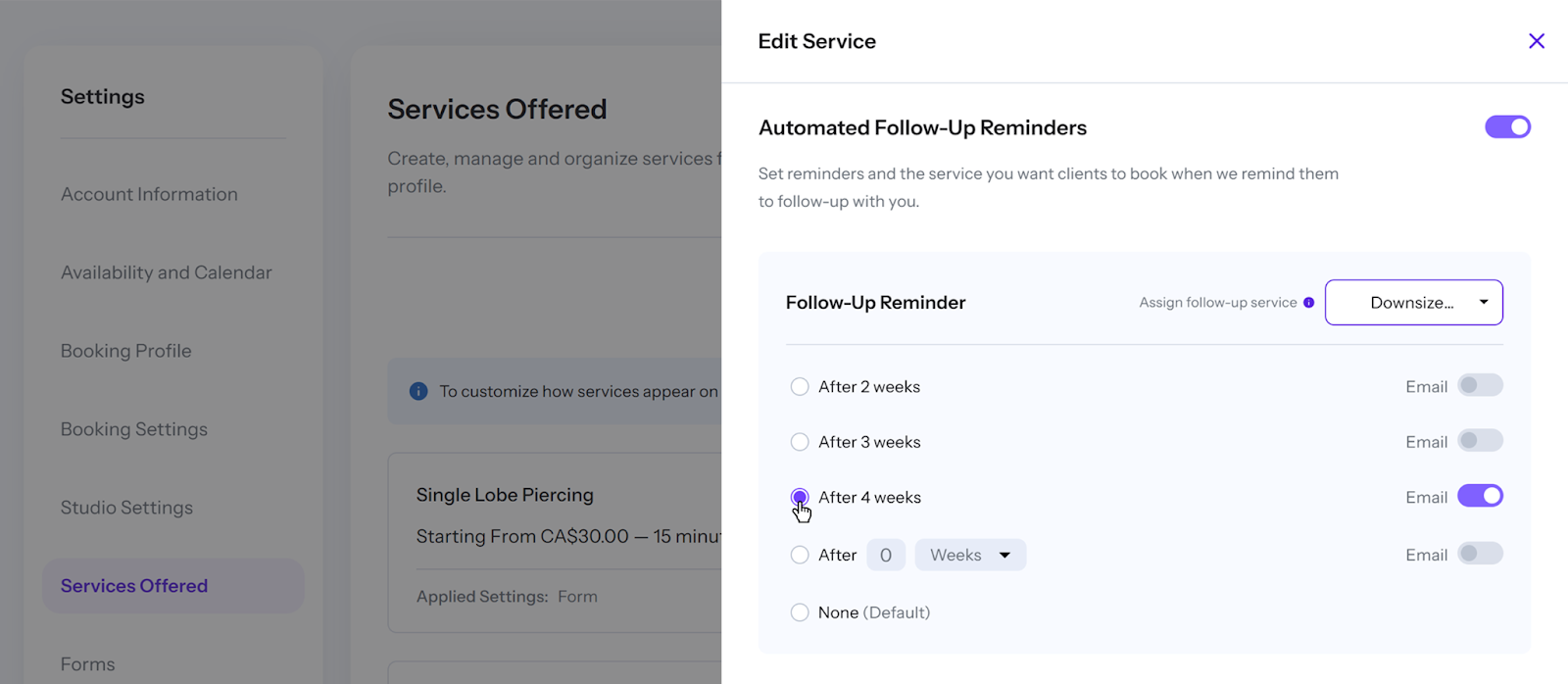
With BooksOpen, getting downsizes scheduled becomes as easy as swapping out jewelry. Get rid of the hassle of manually tracking and following up on appointments with effortless automation and save more time for your clients. With automatic follow-ups, you can keep your clients happy, their piercings healthy, and have them coming back on time.